Al Pacino on Acting: Why Finding the Voice Unlocks Your Character
Al Pacino on Finding the Character’s Voice: Why It’s the Key to Authentic Acting
When it comes to creating unforgettable characters, few actors know the craft better than Al Pacino. His advice is simple but profound:
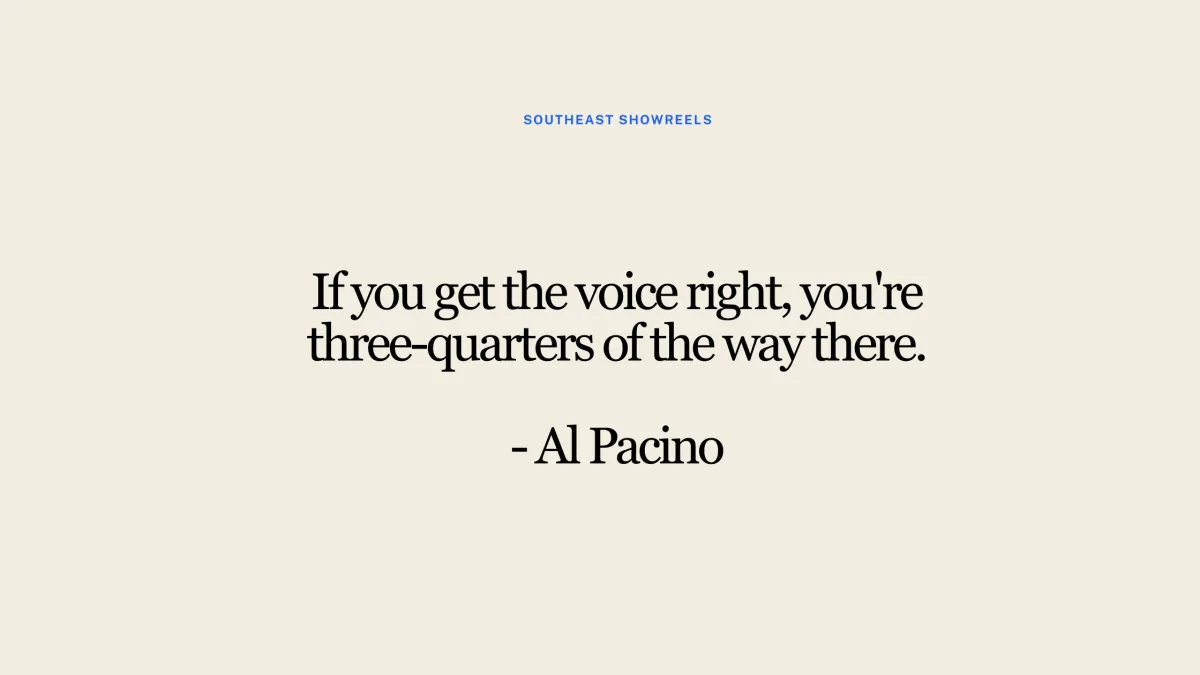
“If you get the voice right, you’re three-quarters of the way there.”
The voice isn’t just about how words sound — it’s about rhythm, energy, and history. Once you discover your character’s voice, everything else falls into place.
Why the Voice Matters in Acting
A character’s voice is more than vocal tone. It tells us about their:
Background (class, culture, upbringing)
Personality (confident, shy, playful, stern)
Emotional state (calm, anxious, angry, joyful)
In short, the voice shapes the audience’s perception before the words even sink in.
4 Ways to Discover Your Character’s Voice
1. Record and Listen Back
Grab your phone, record your lines, and play them back. Ask yourself:
Does the rhythm match your character’s world?
Is your pitch aligned with their age or energy?
Are you too smooth for a gritty hustler, or too casual for a CEO?
Hearing yourself from the outside helps reveal whether the voice feels authentic.
2. Experiment With Vocal Placement
Try shifting where the sound sits in your body:
Chest voice for strength and authority.
Nasal placement for sharpness or tension.
Breathy tone for vulnerability or softness.
Play with tempo and volume until something clicks.
3. Study Real Voices
Instead of guessing, immerse yourself in real-life speech patterns:
Watch interviews of people from your character’s profession or background.
Listen to how they pause, emphasize words, or use slang.
Absorb their rhythm — but don’t mimic. Instead, interpret.
4. Connect Voice to Backstory
A voice carries history. Did your character grow up in chaos, leading to fast, clipped speech? Or did privilege make them speak slowly, deliberately, with confidence?
When you connect voice to backstory, the performance feels lived-in, not forced.
Additional Tips
Avoid overdoing accents unless they’re essential. Subtlety often works best.
Don’t neglect breath control — strong breath support gives you vocal freedom.
Pair voice with physicality: posture and movement should align with vocal choices.
🎬 Want more guidance to refine your craft?
Visit our Script Library at Southeast Showreels and explore 60+ original scripts that challenge your delivery, push your vocal range, and help you experiment with character voices.
Conclusion
For Al Pacino, the voice is the heartbeat of the character. Once you discover it, everything else flows — the gestures, the emotions, the truth of the role.
So next time you’re building a character, don’t just learn the lines. Find the voice, and the character will come alive.
🎭 Ready to unlock your next performance? Visit the Southeast Showreels Script Library and start shaping your craft today.


