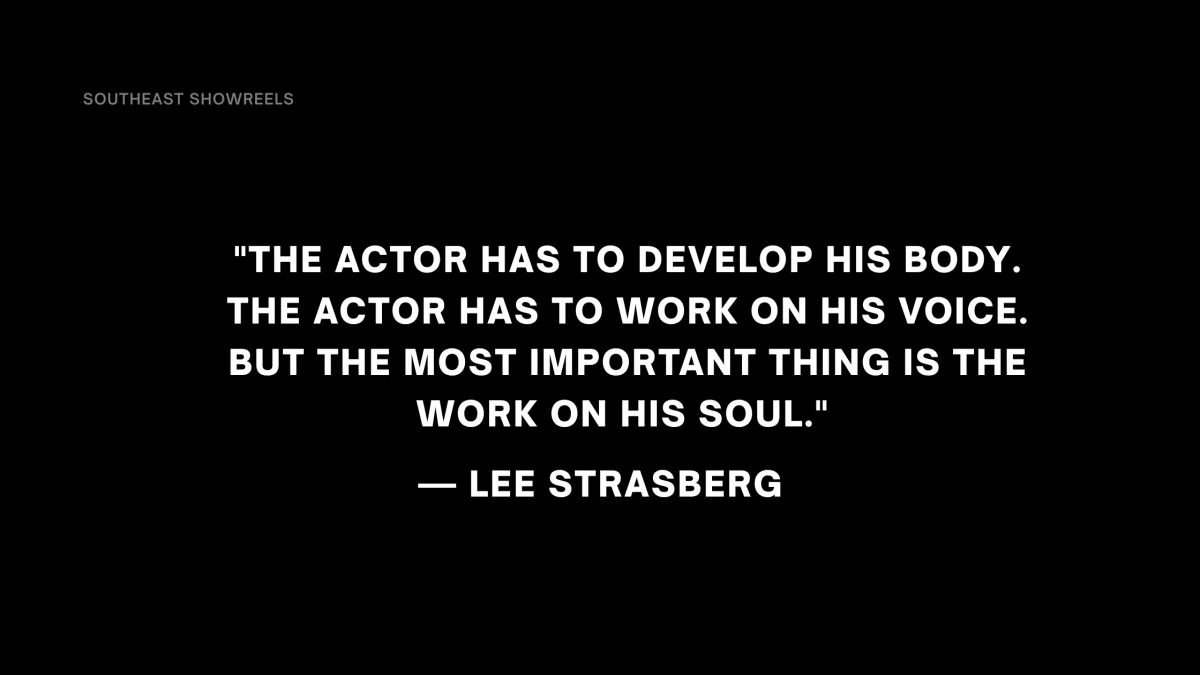
Lee Strasberg method acting philosophy  Alt 3: Scripts designed to help actors connect deeply with their emotions  The Soul of Acting: Lee Strasberg’s Secret to Truly Moving Performances  “The actor has to develop his body. The actor has to work on his voice. But the most important thing is the work on his soul.” — Lee Strasberg  Actors spend hours perfecting technique—warming up their voices, refining their movement, and studying scripts. But according to legendary acting teacher Lee Strasberg, all the physical preparation in the world falls short if you neglect the most important aspect of the craft: the soul.  Strasberg, the father of Method Acting, believed that acting isn’t about pretending to be someone else. It’s about revealing your deepest truths and connecting them to the character. To create a performance that truly moves an audience, you have to be willing to go inward—confronting your fears, memories, and desires—and bring that raw humanity to the surface.  In this article, we’ll explore how to do the inner work Strasberg speaks of, why it matters, and how it can transform your performances from polished to unforgettable.  1. Why the Soul Comes First  Your voice and body are your instruments, but your soul is the source of your artistry. Strasberg believed that unless you tap into your inner life, everything else—technique, diction, movement—risks becoming hollow.  Think of it like this:  Voice gives you sound.  Body gives you expression.  Soul gives you truth.  When an actor’s performance resonates deeply with an audience, it’s rarely because of perfect technique alone. It’s because we recognize something human—something authentic—beneath the performance. That comes from doing the hard, often uncomfortable work of understanding yourself and being unafraid to share your emotional life onstage or on screen.  🎭 Visual Aid Suggestion: An illustration showing three overlapping circles labeled Voice, Body, and Soul, with “Truthful Performance” highlighted in the center.  2. Doing the Inner Work  So, what does it actually mean to “work on your soul” as an actor? Strasberg’s approach was rooted in emotional honesty and self-discovery. Here are a few practices to develop your inner life:  Keep an Emotional Journal Write daily reflections about your experiences, feelings, and memories. Becoming fluent in your emotional world builds self-awareness you can later draw from.  Practice Sense Memory Strasberg famously used this technique to help actors access deep emotions by recalling sensory details tied to real-life experiences.  Explore Your Vulnerability Being emotionally open on cue can be terrifying, but it’s what gives your work authenticity. Rehearsal rooms are your laboratory—practice going to uncomfortable emotional places in a safe environment.  Ask “Why?” Always question your character’s motivations. Connect their struggles, joys, and conflicts to your own lived experience wherever possible.  Doing this inner work transforms a line reading into a lived moment and turns a scripted scene into something that feels real.  3. Technique Without Soul Falls Flat  Strasberg was clear: voice and body training are essential, but they’re not enough. You can hit every mark, project perfectly, and deliver flawless diction, but if the emotional core isn’t there, the audience won’t care.  Think of two actors performing the same monologue:  Actor A focuses purely on technique—posture, breath, projection.  Actor B allows themselves to feel the stakes of the moment, connecting the character’s situation to something in their own life.  Which performance stays with you? Almost always, it’s the second.  🎭 Visual Aid Suggestion: A side-by-side comparison infographic showing “Technically Perfect but Emotionally Flat” vs. “Imperfect but Emotionally Alive” performances.  4. Your Truth Is the Gateway to Authenticity  One of Strasberg’s greatest lessons was that great acting isn’t about pretending—it’s about revealing. You don’t need to invent emotions out of thin air; you need to find them within yourself and let them flow through the character.  For example:  Playing a grieving mother doesn’t require you to have experienced the same loss, but you might connect it to a memory of saying goodbye to someone you love.  Portraying a villain isn’t about justifying evil but understanding universal human emotions like jealousy, fear, or desperation.  When you find that emotional bridge between yourself and the role, the performance becomes personal—and that’s what makes it unforgettable.  5. Make Space for Emotional Honesty  Strasberg believed that to create emotionally alive performances, actors need safe spaces where they can be vulnerable and exploratory without fear of judgment.  Surround yourself with collaborators who respect the process.  Create rehearsal environments where risks are encouraged.  Practice meditation or mindfulness to help stay grounded when exploring intense emotions.  Safe, honest practice environments are where breakthroughs happen.  First Call to Action  🎭 Ready to explore the depths of your emotional range?  At Southeast Showreels, we specialize in helping actors create bespoke demo reels designed to showcase your emotional truth. With over 60 original scripts, we provide material that pushes you to dig deeper and deliver performances that move people.  👉 Book your roadmap call today and start crafting work that’s as soulful as it is powerful.  6. Choosing Material That Challenges You  The scripts you work with matter. To do the kind of soulful work Strasberg champions, you need material that demands emotional depth and truthful connection.  Our Script Library is designed for exactly that:  Original, layered scenes written for film and TV  Characters with rich inner lives  Situations that require authentic emotional responses  The right material doesn’t just prepare you for auditions—it helps you grow as an artist.  🎭 Visual Aid Suggestion: An image of an actor rehearsing a powerful emotional scene, with a caption like: “The right script can pull the truth to the surface.”  Additional Tips for Actors  Study Strasberg’s Work: Dive deeper into his teachings on emotional recall and method acting.  Train Body, Voice, and Soul Together: Balance technical exercises with inner exploration.  Watch Great Performances: Study actors known for soulful work, like Al Pacino, Robert De Niro, and Viola Davis.  Prioritize Mental Wellness: Deep emotional work can be draining—develop routines for self-care and grounding.  Conclusion: The Soul Is the Source  Lee Strasberg’s wisdom is as relevant today as it was when he taught the greats: acting begins and ends with the soul. Your body and voice are tools, but your inner life is what breathes truth into the work.  When you embrace vulnerability, connect deeply with your emotions, and bring your full self to every role, your performances stop being performances at all—they become living, breathing moments.  🎥 Ready to create unforgettable, emotionally charged work? 👉 Explore our Script Library today and start working with material designed to bring your soul to the surface.  Because polished technique might impress, but soulful truth is what moves hearts—and lasts.  SEO Keywords:  Lee Strasberg Method Acting  How to work on your soul as an actor  Emotional depth in acting  Strasberg acting techniques  Script library for actors  Do you also want me to create a companion newsletter email for this Strasberg blog, similar to the Adler and Chekhov ones, to drive traffic straight to the script library? It’ll be short, punchy, and conversion-focused. Should I?

The Soul of Acting: Lee Strasberg’s Secret to Truly Moving Performances

July 07, 20265 min read

The Soul of Acting: Lee Strasberg’s Secret to Truly Moving Performances

Actors spend hours perfecting technique—warming up their voices, refining their movement, and studying scripts. But according to legendary acting teacher Lee Strasberg, all the physical preparation in the world falls short if you neglect the most important aspect of the craft: the soul.

Strasberg, the father of Method Acting, believed that acting isn’t about pretending to be someone else. It’s about revealing your deepest truths and connecting them to the character. To create a performance that truly moves an audience, you have to be willing to go inward—confronting your fears, memories, and desires—and bring that raw humanity to the surface.

In this article, we’ll explore how to do the inner work Strasberg speaks of, why it matters, and how it can transform your performances from polished to unforgettable.


1. Why the Soul Comes First

Your voice and body are your instruments, but your soul is the source of your artistry. Strasberg believed that unless you tap into your inner life, everything else—technique, diction, movement—risks becoming hollow.

Think of it like this:

  • Voice gives you sound.

  • Body gives you expression.

  • Soul gives you truth.

When an actor’s performance resonates deeply with an audience, it’s rarely because of perfect technique alone. It’s because we recognize something human—something authentic—beneath the performance. That comes from doing the hard, often uncomfortable work of understanding yourself and being unafraid to share your emotional life onstage or on screen.


2. Doing the Inner Work

So, what does it actually mean to “work on your soul” as an actor? Strasberg’s approach was rooted in emotional honesty and self-discovery. Here are a few practices to develop your inner life:

  • Keep an Emotional Journal
    Write daily reflections about your experiences, feelings, and memories. Becoming fluent in your emotional world builds self-awareness you can later draw from.

  • Practice Sense Memory
    Strasberg famously used this technique to help actors access deep emotions by recalling sensory details tied to real-life experiences.

  • Explore Your Vulnerability
    Being emotionally open on cue can be terrifying, but it’s what gives your work authenticity. Rehearsal rooms are your laboratory—practice going to uncomfortable emotional places in a safe environment.

  • Ask “Why?”
    Always question your character’s motivations. Connect their struggles, joys, and conflicts to your own lived experience wherever possible.

Doing this inner work transforms a line reading into a lived moment and turns a scripted scene into something that feels real.


3. Technique Without Soul Falls Flat

Strasberg was clear: voice and body training are essential, but they’re not enough. You can hit every mark, project perfectly, and deliver flawless diction, but if the emotional core isn’t there, the audience won’t care.

Think of two actors performing the same monologue:

  • Actor A focuses purely on technique—posture, breath, projection.

  • Actor B allows themselves to feel the stakes of the moment, connecting the character’s situation to something in their own life.

Which performance stays with you? Almost always, it’s the second.


4. Your Truth Is the Gateway to Authenticity

One of Strasberg’s greatest lessons was that great acting isn’t about pretending—it’s about revealing. You don’t need to invent emotions out of thin air; you need to find them within yourself and let them flow through the character.

For example:

  • Playing a grieving mother doesn’t require you to have experienced the same loss, but you might connect it to a memory of saying goodbye to someone you love.

  • Portraying a villain isn’t about justifying evil but understanding universal human emotions like jealousy, fear, or desperation.

When you find that emotional bridge between yourself and the role, the performance becomes personal—and that’s what makes it unforgettable.


5. Make Space for Emotional Honesty

Strasberg believed that to create emotionally alive performances, actors need safe spaces where they can be vulnerable and exploratory without fear of judgment.

  • Surround yourself with collaborators who respect the process.

  • Create rehearsal environments where risks are encouraged.

  • Practice meditation or mindfulness to help stay grounded when exploring intense emotions.

Safe, honest practice environments are where breakthroughs happen.


First Call to Action

🎭 Ready to explore the depths of your emotional range?

At Southeast Showreels, we specialize in helping actors create bespoke demo reels designed to showcase your emotional truth. With over 60 original scripts, we provide material that pushes you to dig deeper and deliver performances that move people.

👉 Visit the Script Library today and start crafting work that’s as soulful as it is powerful.


6. Choosing Material That Challenges You

The scripts you work with matter. To do the kind of soulful work Strasberg champions, you need material that demands emotional depth and truthful connection.

Our Script Library is designed for exactly that:

  • Original, layered scenes written for film and TV

  • Characters with rich inner lives

  • Situations that require authentic emotional responses

The right material doesn’t just prepare you for auditions—it helps you grow as an artist.


Additional Tips for Actors

  • Study Strasberg’s Work: Dive deeper into his teachings on emotional recall and method acting.

  • Train Body, Voice, and Soul Together: Balance technical exercises with inner exploration.

  • Watch Great Performances: Study actors known for soulful work, like Al Pacino, Robert De Niro, and Viola Davis.

  • Prioritize Mental Wellness: Deep emotional work can be draining—develop routines for self-care and grounding.


Conclusion: The Soul Is the Source

Lee Strasberg’s wisdom is as relevant today as it was when he taught the greats: acting begins and ends with the soul. Your body and voice are tools, but your inner life is what breathes truth into the work.

When you embrace vulnerability, connect deeply with your emotions, and bring your full self to every role, your performances stop being performances at all—they become living, breathing moments.

🎥 Ready to create unforgettable, emotionally charged work?
👉 Explore our Script Library today and start working with material designed to bring your soul to the surface.

Because polished technique might impress,
but soulful truth is what moves hearts—and lasts.

R. Keith Harris

R. Keith Harris

I’m R. Keith Harris — an actor, screenwriter, producer, and director with over 25 years in the film industry. From earning my MFA in Acting to teaching storytelling at universities, I’ve lived and breathed this craft. Through this blog, I share insights, lessons, and inspiration to help fellow creatives bring their stories to life.

LinkedIn logo icon
Instagram logo icon
Youtube logo icon
Back to Blog